Ice cream in China has a rich history spanning over two millennia, challenging the common stereotype that Chinese people prefer hot water for wellness. Far from shunning cold treats, ancient Chinese enjoyed sophisticated frozen delights long before they became global staples.
China’s Ancient Affinity for Cold Treats
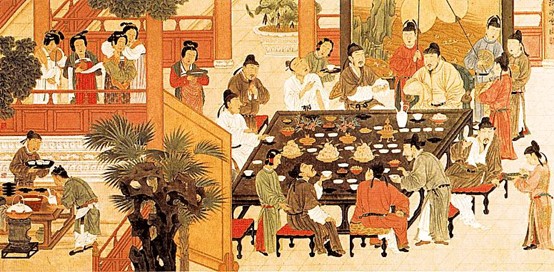
The notion of Chinese people “loving hot water” often overshadows a deeper truth: cold beverages and frozen desserts have been part of Chinese culture for over 2,000 years. As early as the Tang Dynasty (618-907 AD), people crafted tantalizing cold drinks by mixing ice blocks with goat’s milk. These weren’t everyday snacks, but elite indulgences, granted by emperors to favored ministers during sweltering summers.
Unlike today’s machine-whipped soft serves, these “ancient cold treats” involved labor-intensive processes—harvesting river ice in winter, storing it in cellars, and blending it with fruits for a refreshing escape from the heat.
Industrial Beginnings and Urban Appeal
China’s ice cream entered the industrial era in 1926 with the launch of the “Beauty Brand” popsicles by Shanghai’s Haining Foreign Firm, marking the start of large-scale production. By the 1990s, rapid growth in the food industry had attracted significant foreign investments, thereby expanding the market exponentially. Coastal hubs like Shanghai and Tianjin introduced Western-style ice cream, where creamy blends of milk and sugar quickly won over city dwellers.
In the early 20th century, domestic brands like Shanghai’s Bright Dairy emerged, offering affordable classics like milk popsicles that became street-side summer essentials. The 1980s(reform and opening-up) era ignited a boom, with international giants like Wall’s and Nestlé entering the fray. Yet, local heroes held strong: Beijing’s Arctic Ocean, Guangdong’s Five Rams, and Inner Mongolia’s Yili, each infused with regional flavors, ensuring nearly every Chinese city boasted its own iconic ice cream brand.
Cultural and Creative Ice Cream
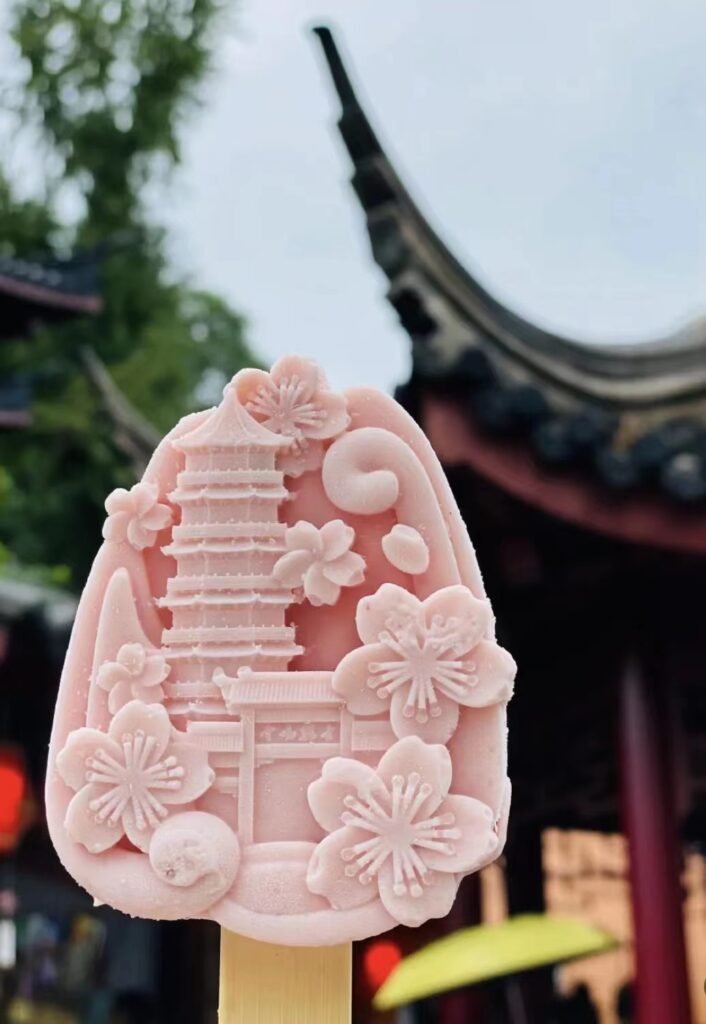
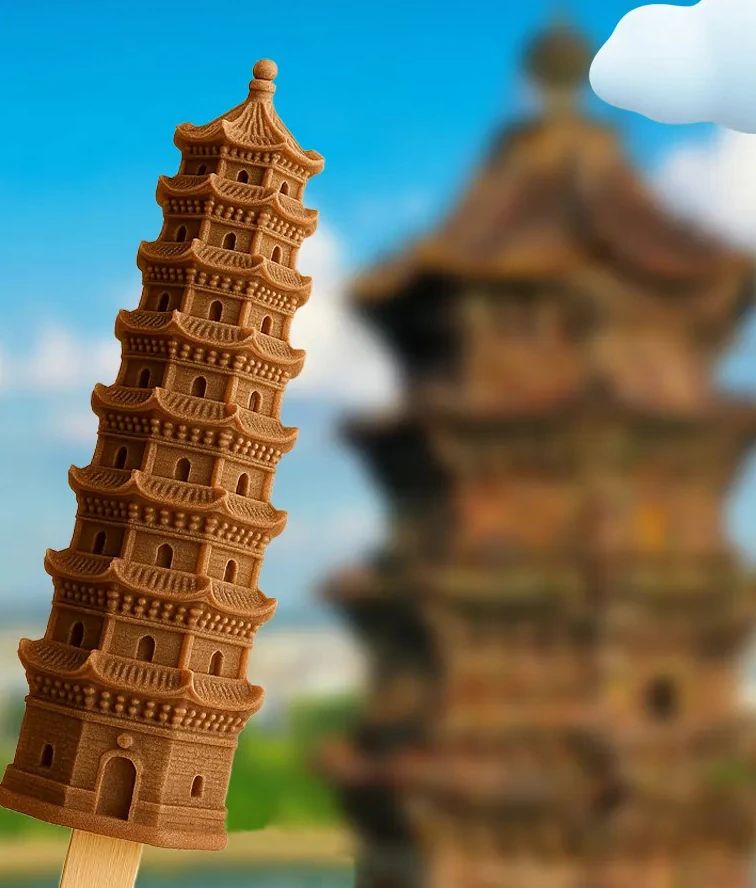
In the 21st century, Chinese ice cream transcended mere refreshment to become a cultural phenomenon, sparking a “Cultural and Creative Ice Cream” (cultural creative) ice cream craze. These treats blend heritage with creativity, turning snacks into shareable art.
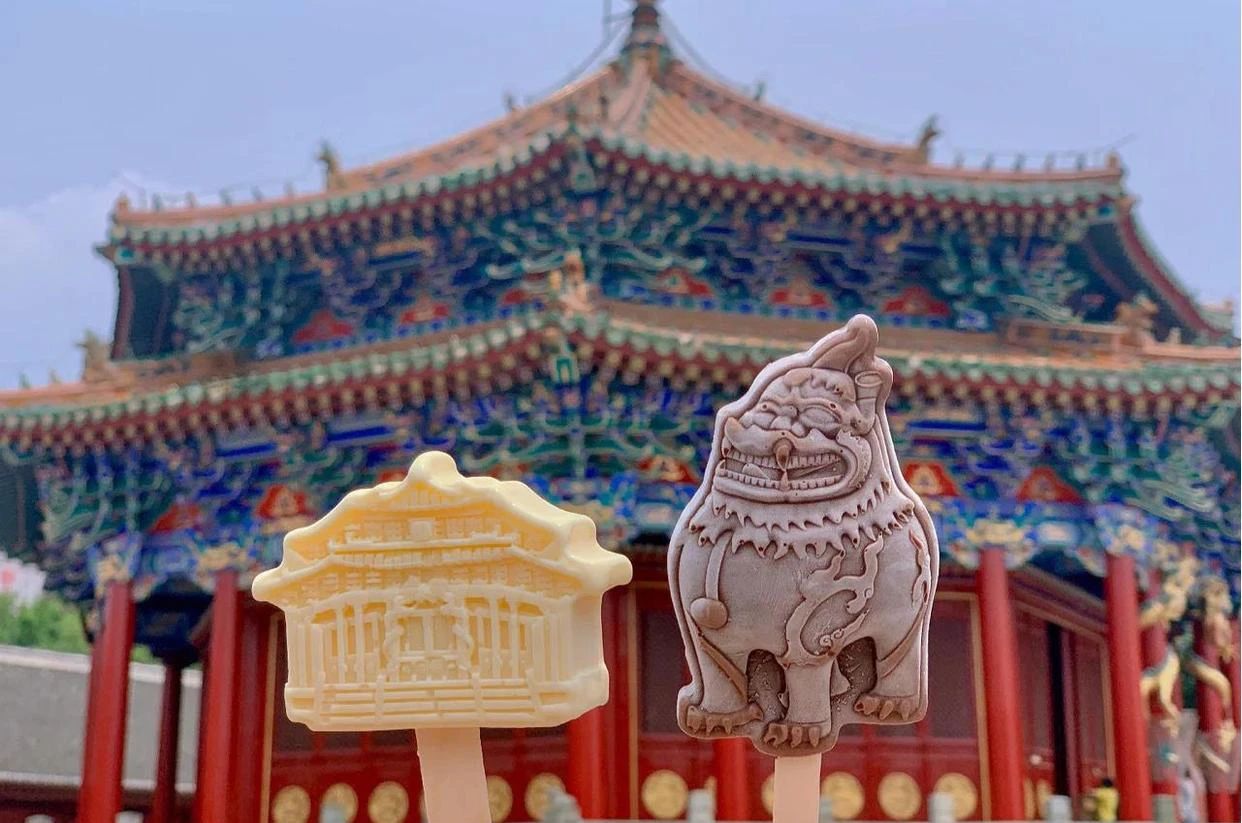
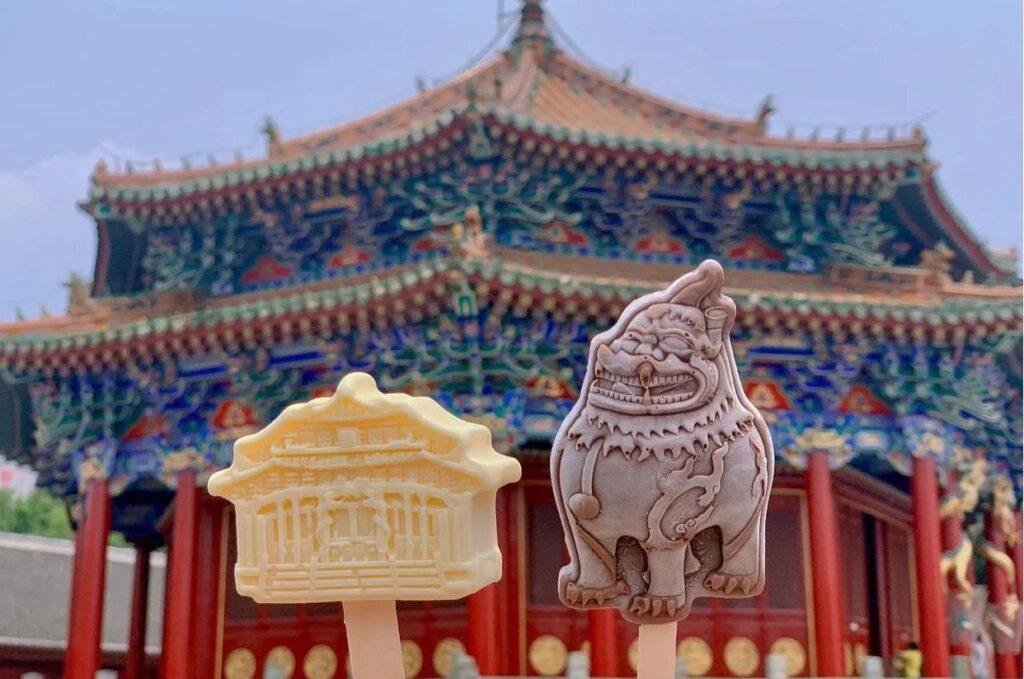
In 2018, Beijing’s Forbidden City launched “Palace Wall Red” and “Ridge Beast” shaped popsicles, featuring imperial red-and-yellow hues that triggered buying frenzies. Regional varieties shine too: Xi’an’s lifelike Terracotta Warrior ice creams are almost too detailed to eat; Suzhou’s garden-inspired versions evoke Jiangnan elegance with green tea and osmanthus flavors; and Yunnan’s floral editions incorporate edible roses and jasmine for poetic bites.
Cross-industry collaborations elevate this trend—Zhong Xue Gao’s 2021 tie-up with the “National Treasures” TV show produced artifact-themed series drawing from bronzeware and Dunhuang murals, complete with QR codes for historical insights.
Health, Sustainability, and Emerging Trends
Consumer demand for healthier options has driven innovation in China’s ice cream sector. Low-sugar, lactose-free, and plant-based varieties proliferate, such as vegan popsicles made from coconut or soy milk that are both eco-friendly and delicious. Aligning with China’s “dual carbon” goals for sustainability, companies are minimizing packaging waste and optimizing cold-chain logistics.
Under the national trend wave, brands emphasize Chinese aesthetics in designs and traditional ingredients like red beans or tea. For younger consumers prioritizing cultural expression and emotional uplift, ice cream has evolved from a cooling aid to a “happiness source”.
With Cultural and Creative Ice Cream treats becoming must-have photo ops at tourist spots and social media fodder. This cross-boundary fusion underscores ice cream’s role in cultural outreach, industry synergy, and social currency.
China’s booming ice cream market
China’s ice cream market continues to lead globally, driven by innovation and cultural appeal. According to the 2022 China Ice Cream Industry Trend Report, the market reached approximately €137 billion in 2020 and exceeded €149 billion in 2021. Statista data shows it hit around €213 billion in 2024, with projections to reach €232 billion by 2026.
As Cultural and Creative Ice Cream products captivate global audiences, Chinese ice cream not only delights taste buds but also exports cultural heritage, cementing its place in the international spotlight.
Note: Images in this article are sourced from the internet. Data is sourced from the Green Agriculture and Food Nutrition Committee of the China Green Food Association and Statista.
Compressore*: https://www.nationaldailypress.it/compressore-immagini-gratuito-inserire-in-servizi/
Nota di trasparenza
I link rimandano per vostra comodità a pagine relative a società affiliate. Qualora un lettore decidesse di effettuare un acquisto tramite tale collegamento, il giornale potrebbe ricevere una piccola commissione come affiliato, senza alcun costo aggiuntivo per l’utente. Grazie
AMAZON: https://amzn.to/4tU6brg
EBAY: https://ebay.us/pV4iYd