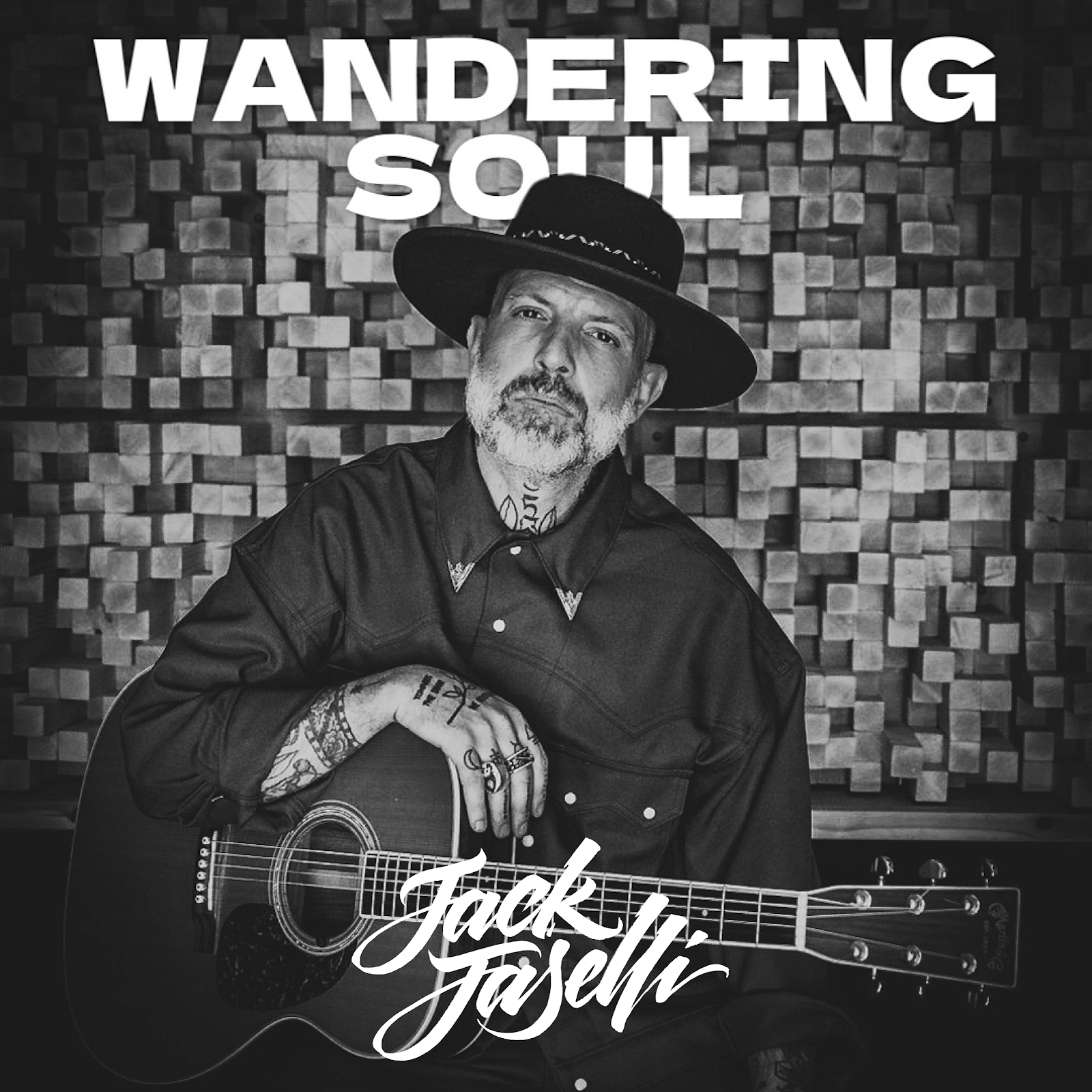
Jake Smith, better known as The White Buffalo, is not just a songwriter — he’s a storyteller of fate, a raw and honest voice that travels the dusty roads of America and the invisible roads of the human soul. After twenty years of songs lived, sweated, and loved, he releases his first-ever live album, A Freight Train Through The Night — a sonic journey rolling along the tracks of memory and passion.
Recorded at the Belly Up in San Diego, with the audience breathing in sync with the band, this limited-edition double vinyl captures the full intensity of the live experience: imperfect, visceral, and real. Smith leads us through this new chapter with the force of a freight train in the night, loaded with emotion, lyrics, and distortion — revisiting fan favorites and offering new life to old classics.
We had the honor of asking him a few questions, diving into the past and the future, the stage and the truth. Here’s what he shared with us.
1. Jake, a freight train through the night doesn’t stop. It just keeps going, carrying dust, dreams, and sound. Why this title? What does “A Freight Train Through The Night” represent for you, personally and musically?
The title “A Freight Train Through the Night” is a lyric from “How The West Was Won”, and was suggested by Christopher Hoffee—who first suggested it. For me, personally and musically, it represents the ferocity and energy that people might not expect from our live shows. It also brings to mind the open American landscapes, the lonesome West, and the relentless power of a freight train moving through the night. I wanted a title that captured all of that—the cinematic, raw, and powerful feeling that runs through our music and our performances. That’s why I chose it, instead of naming the album after a specific song.
2. You’ve said this live album spans over 20 years of your songwriting. How did you choose the 16 tracks to include? Was it more of an emotional decision, or did you follow a narrative thread?
Choosing the 16 tracks for the live album was definitely a mix of emotion and instinct. Some songs were obvious choices—fan favorites that people expect to hear and would be disappointed if we left out. But I also wanted to include some deeper cuts that I felt we could really bring to life in a new way on stage. There was a practical side too, since putting the album out on vinyl meant we had to limit the number of songs. In the end, it wasn’t so much about following a strict narrative thread, but more about picking the songs that felt right—both for me and for the fans.
3. It was recorded at the Belly-Up, a venue with a long and personal history for you. What kind of energy were you trying to capture from those nights? What makes that place and that crowd so special to you?

When we recorded at the Belly Up, I really wanted to capture the energy that comes from feeling completely at home on that stage. We’ve been playing there for about 20 years, and there’s just something about knowing the staff, the room, and the vibe that makes it special. The comfort and familiarity let us be ourselves and really give everything in our performance. The crowd at the Belly Up is always amazing—they know us, and there’s this mutual respect and excitement that you can feel in the room. That’s the kind of energy I wanted to capture: something real, raw, and deeply connected to both the place and the people who come out to see us.
4. Live means visceral, raw, and exposed. You’ve spoken about the purity of your livesound, no backing tracks, no filters. What do you discover about yourself on stage, stripped down like that?
When I’m on stage, stripped down with no backing tracks or filters, I discover just how much I value honesty and vulnerability in music. There’s nowhere to hide—every mistake, every imperfection is out there, and I’ve learned to embrace that. It’s in those raw, exposed moments that I feel the most connected to the music, to the band, and to the audience. I find out what I’m really made of, and I’m reminded that the beauty of live performance comes from its unpredictability and authenticity. That’s where the real magic happens for me.
5. There’s a completely reimagined version of “House of the Rising Sun” on the album. Why now? And how do you approach reshaping such an iconic song without feeling overwhelmed by its legacy? Is it an act of reverence, or rebellion?
I wanted to reimagine “House of the Rising Sun” now because I felt it was time to have a version that was truly mine and ours—a version that could really represent The White Buffalo. The “Sons of Anarchy” version, with its twisted lyrics, just didn’t feel as relevant anymore, so I wanted to create something that felt authentic to us. I approached reshaping such an iconic song by arranging it differently—changing the time signature, the tempo, and blending elements from previous versions with a new arrangement. Honestly, it’s a bit of both reverence and rebellion. I have a lot of respect for the song’s legacy, but I also wanted to push it into a new space and make it our own. That’s what made it exciting, and that’s what I wanted to express with this new version.
6. Every note, every word in a live set seems to carry different weight. How do you relate today to the songs you wrote in your twenties? Do they still surprise you, or have you learned to watch them from a distance?
When I go back and listen to the songs I wrote in my twenties, it’s honestly still a bit overwhelming and emotional. I don’t make a habit of listening to my own music, so when I do, I’m often surprised by what I hear—sometimes I even think, “Wow, you wrote that.” Those songs still move me and make me feel something, whether it’s heartbreak, anger, or just a story that I find interesting. I don’t really watch them from a distance; I still feel connected to them, and I’m proud of what I created. At the same time, there’s a sense of responsibility to live up to that legacy and to keep caring as much about the words and stories as I always have.

7. You mentioned the “push and pull” between stage and crowd that happens every night. How important is that emotional exchange for you? Does the audience shape the performance, or do you allow yourself to be changed by them?
That emotional exchange—the push and pull between the stage and the crowd—is everything to me. It’s what makes each night unique. The audience absolutely shapes the performance. If I’m getting energy and excitement from the crowd, it lifts me up and pushes me to give even more. There’s a real give-and-take, and I definitely allow myself to be changed by them. The stage is a magical place where emotions can shift in an instant, and that connection with the audience is what makes live music so powerful for me.
8. “A Freight Train Through The Night” almost feels like a statement piece, an artistic identity in motion. Is this album a bridge toward something new, or more of a reflection, a reckoning?
For me, “A Freight Train Through The Night” is both a reflection and a bridge. It’s definitely a look back—a reckoning with everything I’ve written and experienced over the past twenty years. There’s a lot of pride and emotion in revisiting those songs and seeing how far I’ve come. But at the same time, it feels like a statement piece that’s pushing me forward. It’s a way to honor the past while also setting the stage for something new—maybe something even more raw and organic in the future. So, it’s both a celebration of where I’ve been and a bridge to where I’m headed next.
9. You’re about to land in Italy for a few tour dates. What’s your relationship like with the Italian audience? What do you take home from those shows, where language may divide, but soul and music unite?
My relationship with the Italian audience is really special. The promoters there feel like family—we travel together, eat together, and really share the full Italian experience. The crowds in Italy are some of the best in the world: they’re enthusiastic, energetic, and totally engaged from the very start. Even though there might be a language barrier, the soul and the music always unite us. What I take home from those shows is that deep sense of connection—knowing that music can bring people together no matter where they’re from or what language they speak. It’s always an incredible, unifying experience that stays with me long after the tour is over.
10. If you could stop the train for a moment, look in the mirror, right now, with this live album in hand and a tour ahead, what do you see? And what stories do you still feel you haven’t yet found the courage to tell?
If I could stop the train for a moment and look in the mirror, holding this live album with a tour ahead, I’d see someone who’s always tried to be honest and human in my songwriting. I’m proud of the stories I’ve told, but I know there are still so many more out there—stories I haven’t yet found the courage or inspiration to write. I’ve never really been afraid of any particular theme, but as I get older, maybe courage shifts a bit. Life keeps bringing new worries, thoughts, and ambitions, and with every stage, there are new stories waiting to be told. The real pinnacle for me is when a song stops being just mine and becomes something that means something to someone else. That’s what I’m always chasing, and I know there are still stories inside me that I haven’t yet found the words—or the courage—to share.
TOUR
Thursday, September 4 Urban Park in Capoterra, Cagliari Sat, September 6 Old Fortress Livorno, Sun, September 7 Malatesta Fortress Cesena, Italy Monday, September 8 Circolo Magnolia Segrate