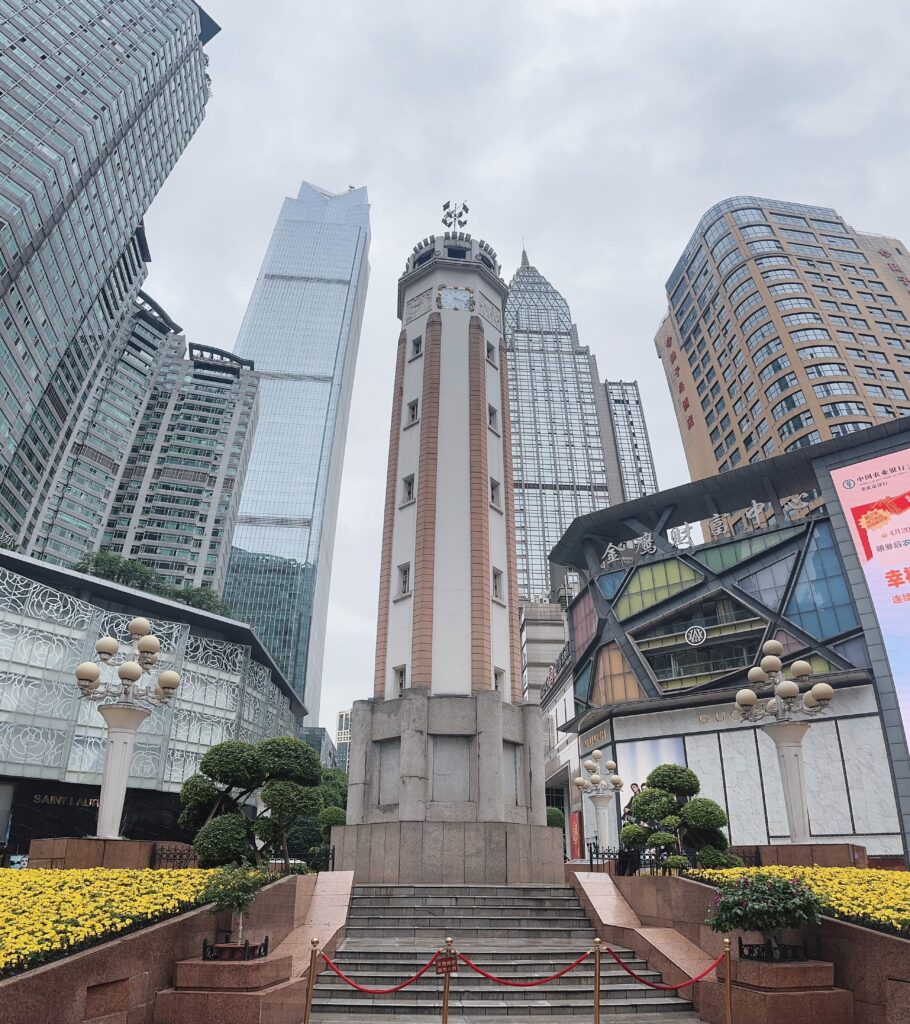
Imagine stepping out from the 15th floor of a building and finding yourself on a bustling street. Cars rush by. Tiered buildings stack like giant blocks. Stairs, elevators, and even a monorail weave through the scene as if by magic. This is not science fiction. This is Chongqing. Known as China’s “8D magical city,” it is perhaps the nation’s most dizzying metropolis. Here, conventional navigation often fails, and every corner reveals a logic-defying urban spectacle.
A Vertical Illusion of Space and Time
Chongqing sits where the Yangtze and Jialing rivers meet in Southwest China. The city did not simply expand outward; instead, it grew upward and downward at the same time. Because of the mountainous terrain, architects had to keep innovating. Over time, they created a multi-dimensional labyrinth that locals call the “8D city,” turning ordinary commutes into small adventures.
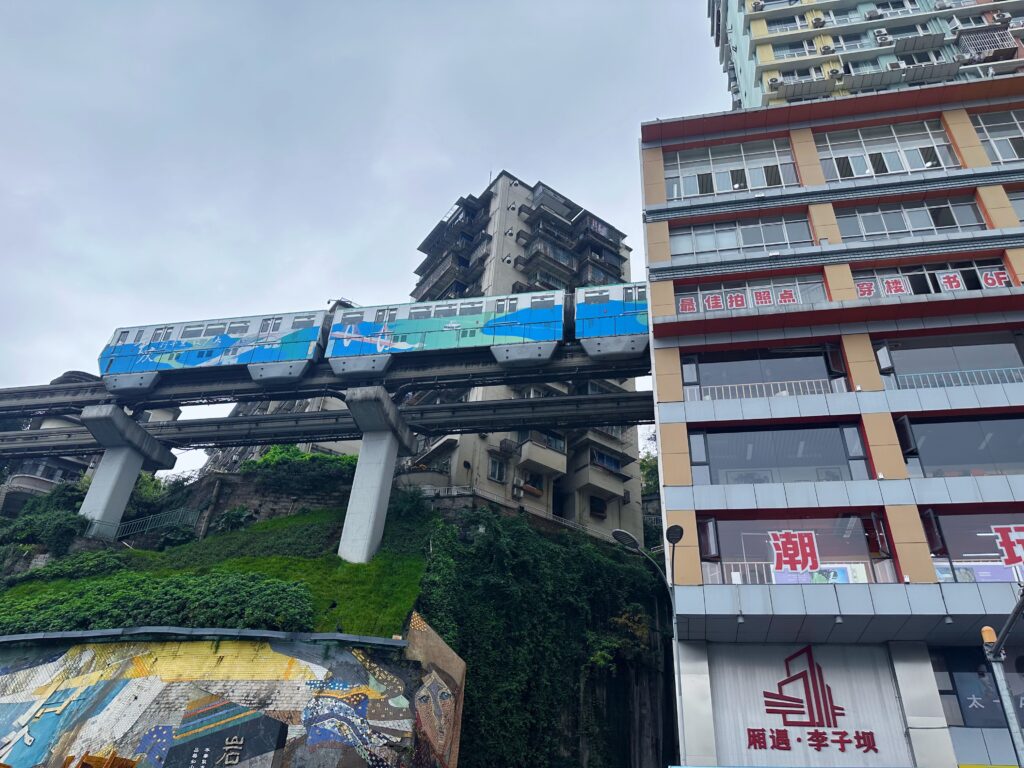
What fascinates visitors most is the city’s vertical layering. A normal-looking street may be the roof of the building below. Whole neighborhoods stack like mille-feuille. The Liziba monorail station once stunned the world: photos show the train passing through a residential block, almost brushing window sills. This is not a special effect. It is daily transport in Chongqing.
Do not trust appearances. You might think you are strolling at ground level, yet you could already be five floors above another street. Architects use the slopes with great skill. One tower can run from riverside to hilltop, with shopping malls, homes, and underground galleries in between. As a result, the city feels like a 3D map stretched into “8D”—more dimensions, more layers, and more surprises.



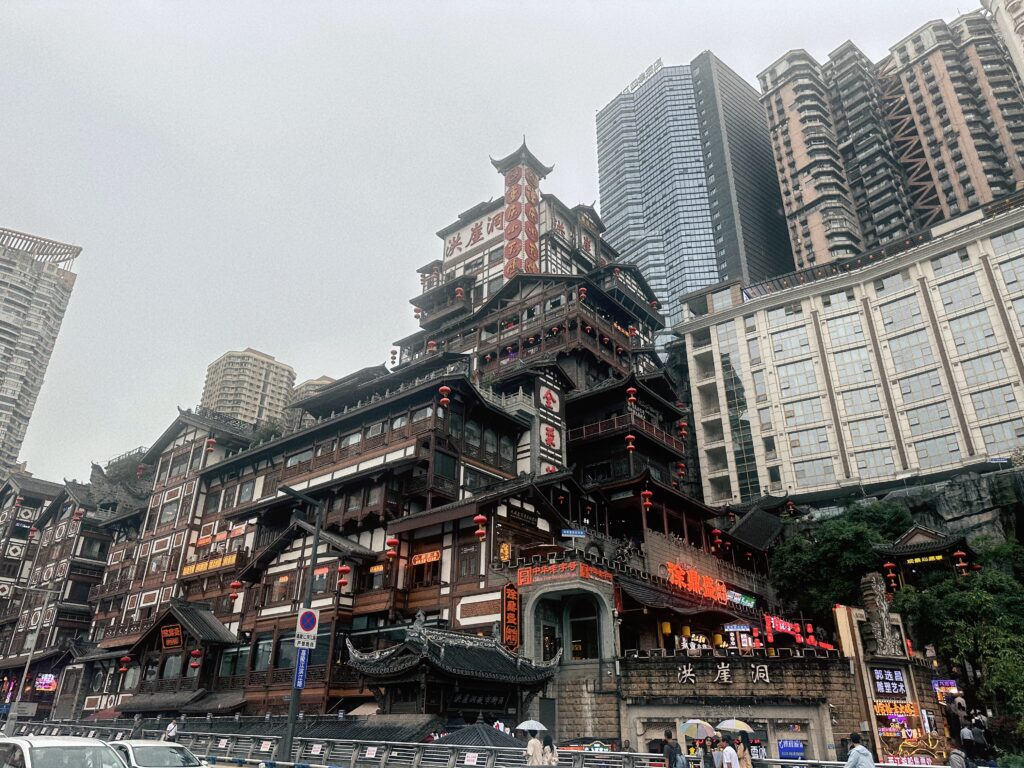
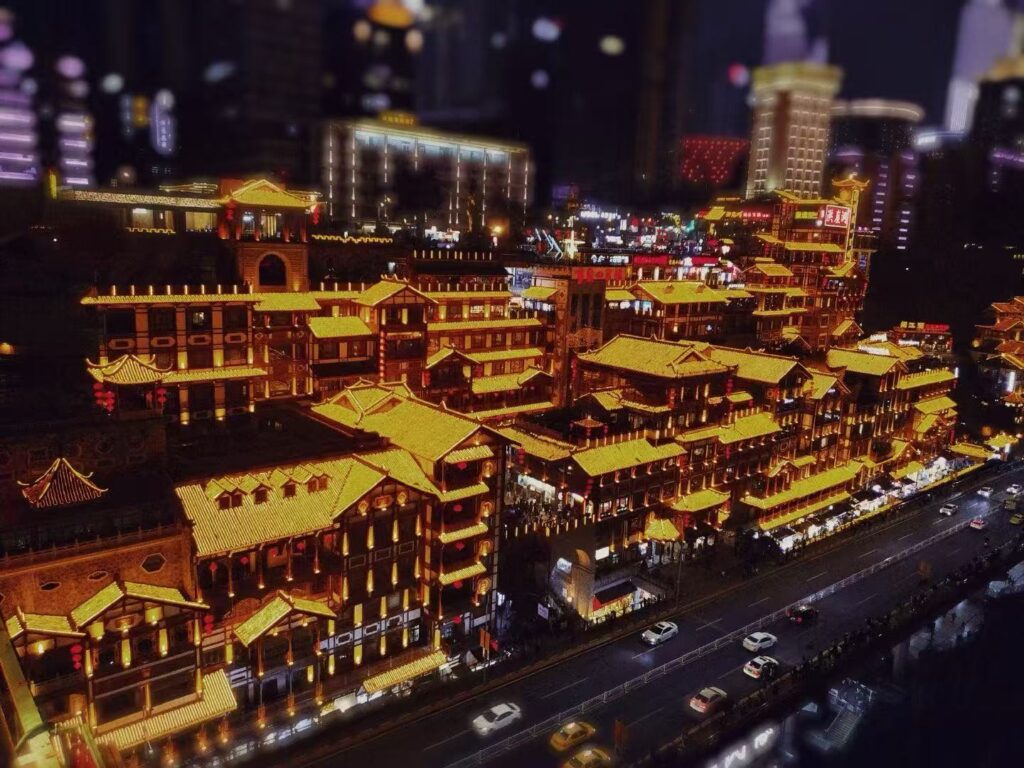
The most iconic “magical moment” happens at Hongyadong. This 11-story stilted complex clings to a cliff. From across the river, its true height becomes clear; from the water, it looks like a single-story façade. By day, it resembles an old riverside town. By night, thousands of lanterns glow, and stacked pavilions seem to grow straight out of the rock.
The “Mystery Maze” Game
The terrain makes GPS less reliable. Verticality creates surreal scenes: you cross a skybridge and suddenly stand level with what you thought was a tower roof. A café terrace may shelter a highway beneath it, while another building rises above the road like a new ground.
Locals seem born with 3D glasses. Straight lines are rare. Some visitors start from a pedestrian street in search of a bowl of noodles, climb stairs for half an hour, and end up at their starting point—only from a different level, switching from “ground layer” to “sky layer.”
When night falls, Chongqing turns cyberpunk. Thousands of neon signs light up along the slopes. Reflections ripple on the rivers. Light traces curve around the ridges. The futuristic glow meets natural mountains, creating a view that feels both ancient and ultra-modern.
Beyond Buildings: Food and Global Links
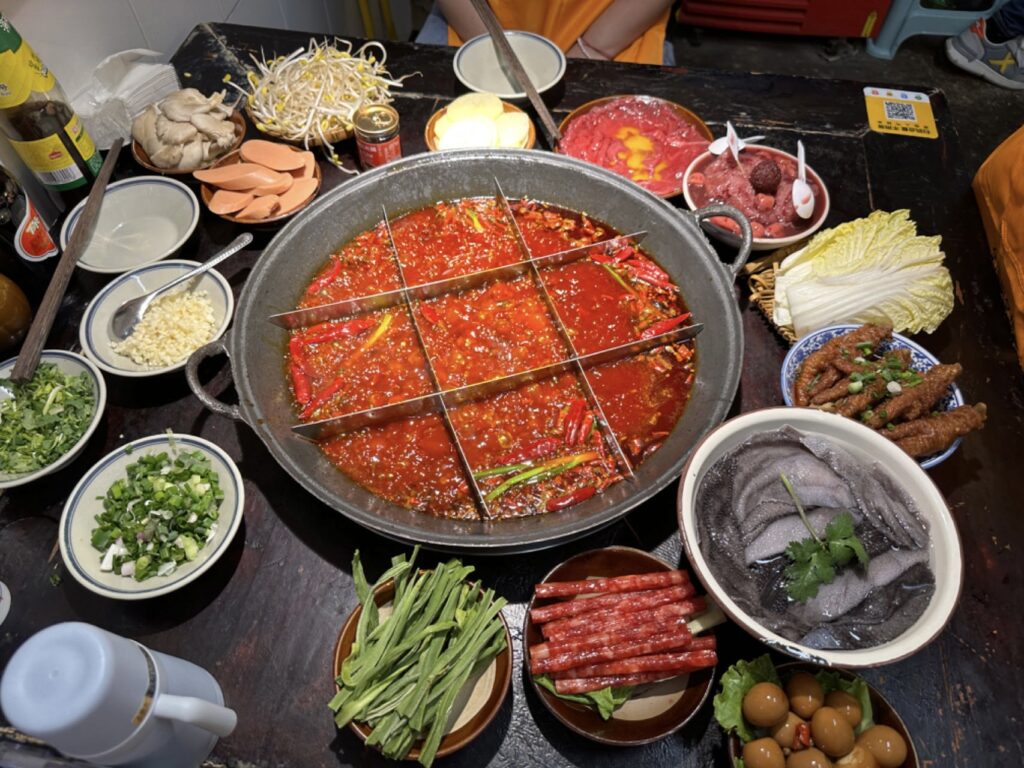
Chongqing is also a sensory feast. As China’s hotpot capital, the air carries the tingle of Sichuan pepper. On hillside terraces, red-oil broth bubbles while tripe and duck intestine flash-boil to a perfect crunch.
Meanwhile, the city has built major industry clusters in electronics and automobiles, along with equipment manufacturing, chemicals, materials, energy, and consumer goods. It is a global base for laptop production and a leading hub for mobile phones.
Chongqing has also earned international friendship awards. By 2024, it had formed sister-city ties with 56 provinces or cities across 37 countries, fostering broad cooperation. Notably, in 2018 Chongqing and Piacenza in Italy established a sister-city relationship.
Conclusion: Unlock Your “8D Adventure”
Chongqing is more than a city; it is an interactive game. The best approach is to embrace getting pleasantly lost: follow lanes scented with chili and peppercorn, ride elevators that open onto different worlds, and accept that in perhaps the world’s most truly three-dimensional city, the journey is the destination—provided you can find your way.
Cinese: 照片由李晴月、鲍竞卓、陈伟提供
Inglese: Photos by Bao Jingzhuo, Li Qingyue, Chen Wei
Italiano: Foto di Bao Jingzhuo, Li Qingyue e Chen Wei