China has built the world’s most modern high-speed rail network. It is not only a means of transportation, but also a “steel business card” showcasing the country’s comprehensive strength.
CR450 Breaks Global High-Speed Rail Records
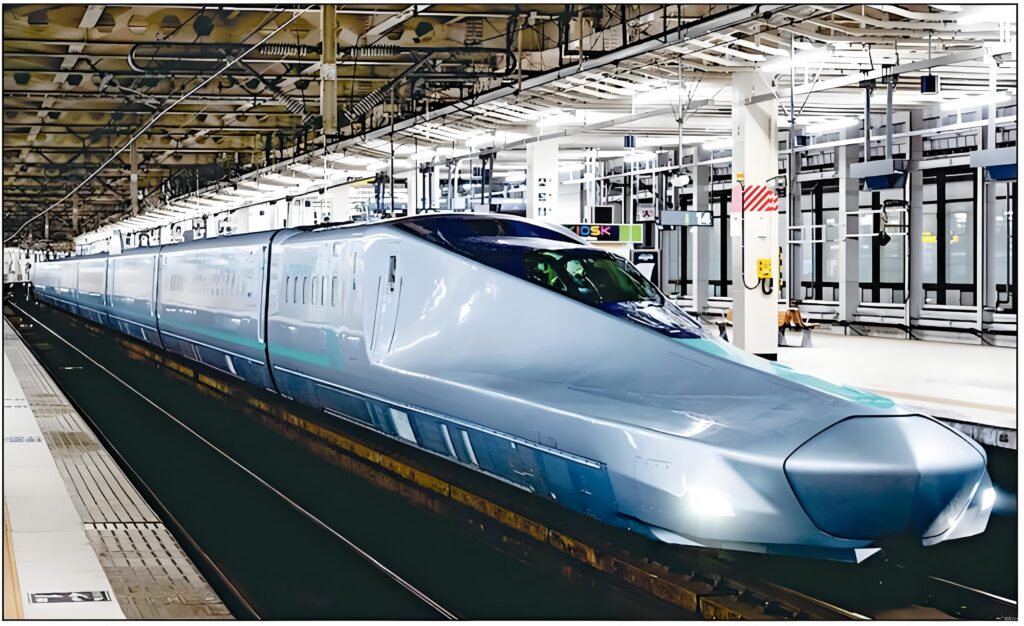
On October 20, 2025, China’s high-speed rail development reached a milestone. The CR450 EMU achieved an astonishing record during testing, setting a single-train speed of 453 km/h and a relative meeting speed of 896 km/h. This signifies that China’s rail transit equipment technology has fully entered the world’s leading ranks. High-speed rail has officially entered the “450 era.”
The World’s Largest High-Speed Rail System
The achievements of China’s high-speed rail system are reflected in its unparalleled scale.
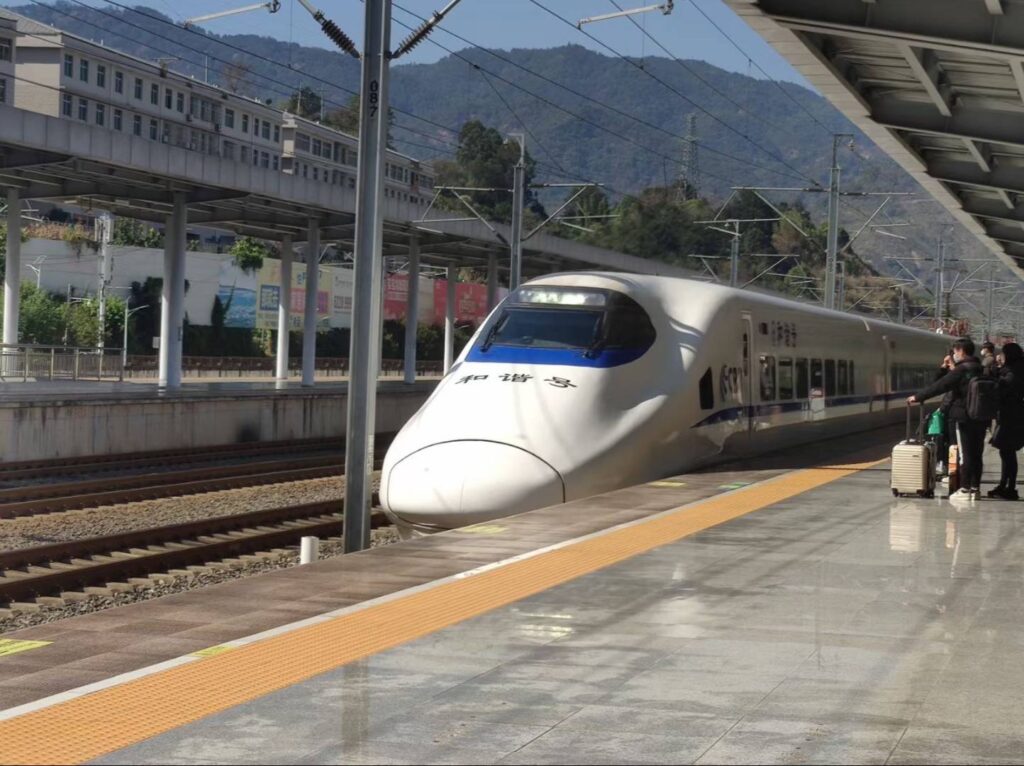
By the end of 2024, the total operating mileage of railways in China reached 162,000 kilometers. Among them, the mileage of high-speed rail reached 48,000 kilometers, accounting for more than two-thirds of the world’s total high-speed rail mileage.
This network covers 97% of cities with an urban resident population of over 500,000 nationwide.
The opening of high-speed rail has significantly shortened the “time distance” between regions, fostering “city-like” living circles. It has also promoted the efficient flow of production factors such as talent, technology, and capital throughout the country.
A New Engine for the Economy
Driven by the robust high-speed rail network, China’s national railway system continues to demonstrate strong overall operating performance. Net profit reached 11.72 billion yuan in the first three quarters of 2025.
The value of China’s high-speed rail extends far beyond revenue generated from its wheels. Its true power lies in the powerful effect it generates as an “economic artery.”
As a culmination of high-end equipment manufacturing, high-speed rail has driven collaborative innovation and industrial upgrading in dozens of fields, including materials science, power engineering, electronic information, and automatic control, giving rise to a massive high-end industrial cluster.
Engineering Miracles and Green Technology

China, relying on its independently developed engineering and construction technologies, has woven a dense network of railways across complex and diverse geographical environments.
For example, the Chongtai Yangtze River Tunnel on the Shanghai-Chongqing-Chengdu High-Speed Railway, currently under construction, is 14.25 kilometers long. It is currently the world’s largest and highest-standard high-speed railway tunnel across a river, representing the pinnacle of global tunnel engineering.
While pursuing speed, China’s high-speed rail also emphasizes green and sustainable development.
The CR450 has outstanding energy efficiency advantages. Based on 500,000 kilometers of annual operation, a single train can reduce carbon dioxide emissions by approximately 800 tons per year, equivalent to planting 44,000 trees. If the national high-speed rail network is gradually upgraded, the annual emission reduction will reach millions of tons.
A New Digital Experience
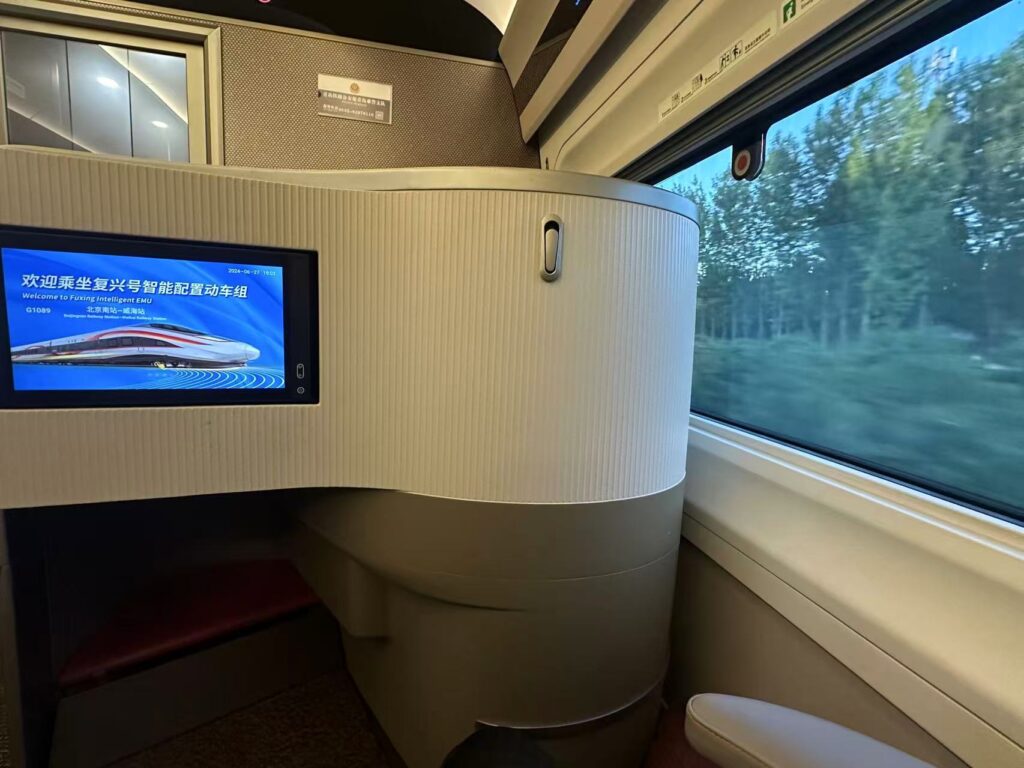
Boarding China’s high-speed rail offers passengers a highly digitized travel ecosystem.
Through powerful digital platforms (such as 12306, with over 800 million registered users), high-speed rail provides convenience to every passenger.
Online seat selection, online meal ordering and delivery, ID card scanning for boarding, and air-rail intermodal transport are just some of the services that transform high-speed rail travel from an efficient mode of transportation into a comfortable, convenient, and personalized modern lifestyle experience.
This public service-centric philosophy is a distinctive feature that sets China’s high-speed rail apart from purely commercial operation models.
A New Global Calling Card
High-speed rail has become a shining calling card for China’s high-end manufacturing industry’s “going global” strategy.
As a crucial component of the Belt and Road Initiative, from the Jakarta-Bandung High-Speed Railway in Indonesia to the Lancang-Niger high-speed trains on the China-Laos Railway, and the Hungary-Serbia Railway, China is exporting its mature high-speed rail technology, standards, and management experience to the world.
This is not merely commercial cooperation, but a sharing of a development model. Through infrastructure construction, China is helping to recreate the magnificent “interconnectivity” of the ancient Silk Road on a broader global stage, writing a new chapter of exchange in the form of steel and electronics.
Data source: China State Railway Group
Image Source: China News Service, Liu Yuhan and Fan Zhiheng.