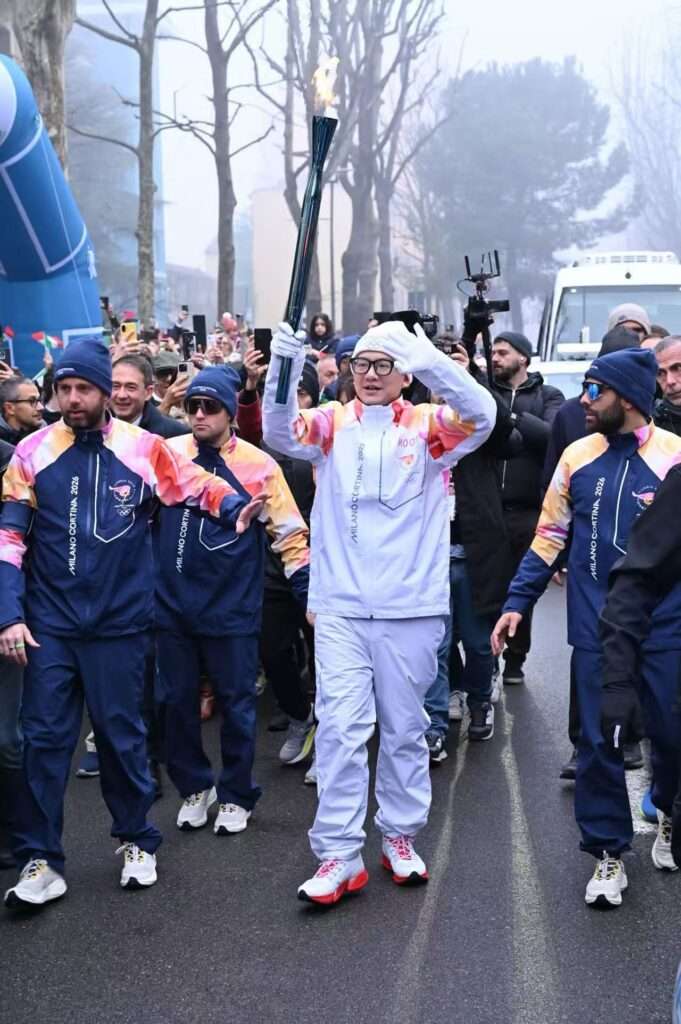
As the first torchbearer of the Milan leg of the Winter Olympics torch relay, Zhang Wenquan from Beijing shared with National Daily Press an “everyday” understanding of the Olympic spirit. For him, the torch is not only a sporting ritual—it is a street-level encounter between people, where enthusiasm, curiosity, and kindness naturally gather around the same flame.
During the relay, he did not choose to sprint. Instead, he deliberately slowed down and held the torch higher and longer. “I wanted everyone to be able to see it and capture it,” he explained. Over a short distance, the crowd’s involvement turned the route into a journey that felt “completed together.”
The Olympics for Ordinary People
Zhang does not place himself inside a heroic spotlight narrative. He repeatedly emphasizes that he is not a celebrity, but someone who has followed the Olympics for years—drawn closer by love for the Games. Applying to become a torchbearer was not easy: documents, repeated submissions, procedures that stalled. It took a long time before the final confirmation arrived.
He describes himself as an Olympic enthusiast—someone who loves the Games, collects memories, follows events, and is willing to invest time and patience for a chance to participate. It is precisely this kind of ordinary commitment that brings the Olympic spirit down from grand slogans into real life. For Zhang, it is not an abstract “faster, higher, stronger,” but the willingness to do something—however small—for what you truly love.
A Hug That Needed No Translation


The moment that best captured the day happened when Zhang met people after the relay: an Italian boy ran toward him, visibly excited, and hugged him tightly, then pulled his family over to take photos. Almost no words were needed. To the child, a torchbearer was not “someone from a certain country,” but a symbol that “the Olympics is right here, near me.”
Over the course of the day, similar scenes repeated themselves. Several Italian locals approached warmly for selfies—some asked for a handshake, others simply wanted a souvenir photo with a torchbearer and an “Olympic lover from China.” In that spontaneous enthusiasm, the Olympics felt less like a distant global event and more like something that could be touched, shared, and remembered.
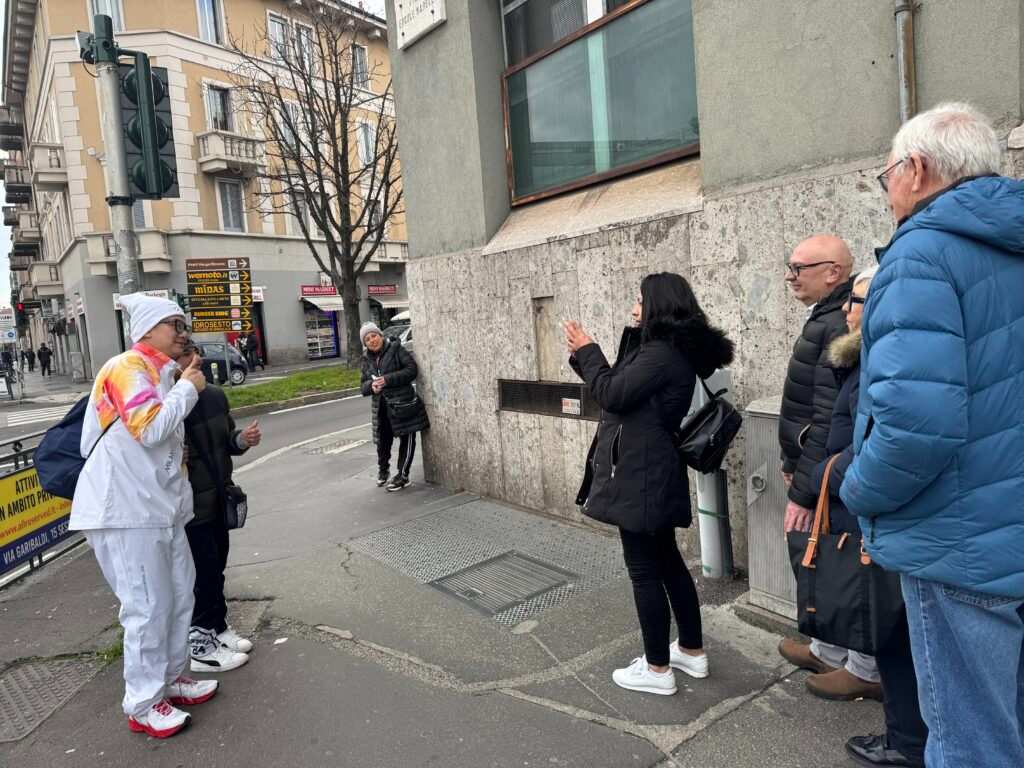
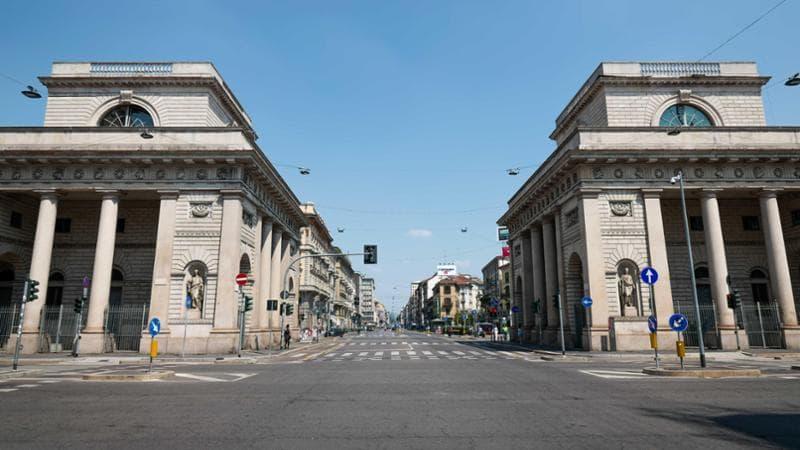
Milan: Romance and Elegance
For Zhang, coming to Milan was also a close-up introduction to Italy. He describes the city as “romantic”and rich in cultural atmosphere. As a first-time visitor to Europe, he noticed countless small gestures of kindness: even when language failed, people were happy to communicate through simple words, hand gestures, and smiles. “They really want to connect, and they are patient,” he said.
He also shared an observation that amused him: Milan feels “elegant,” perfectly aligned with its image as a fashion capital. Even the torch relay itself felt like a civic festival—more than a sports moment, it mobilized the city’s order, aesthetics, and public emotion into a shared experience.
Cultural Exchange and a Cycle of Goodwill
In Zhang’s telling, the Olympic spirit is not only about results or rivalry. He prefers to see it as a cross-cultural “common language”: people from different countries come closer because of the same event, present the best of their cultures, and encourage one another.
That is why he also speaks about doing his part for cultural exchange between China and Italy—through a more truthful, everyday approach that helps more Italians understand China, and more Chinese understand Italy’s lifestyle and urban character. In his view, meaningful storytelling does not have to be grand. It can begin with something small and concrete: one person, one flame, one photo.
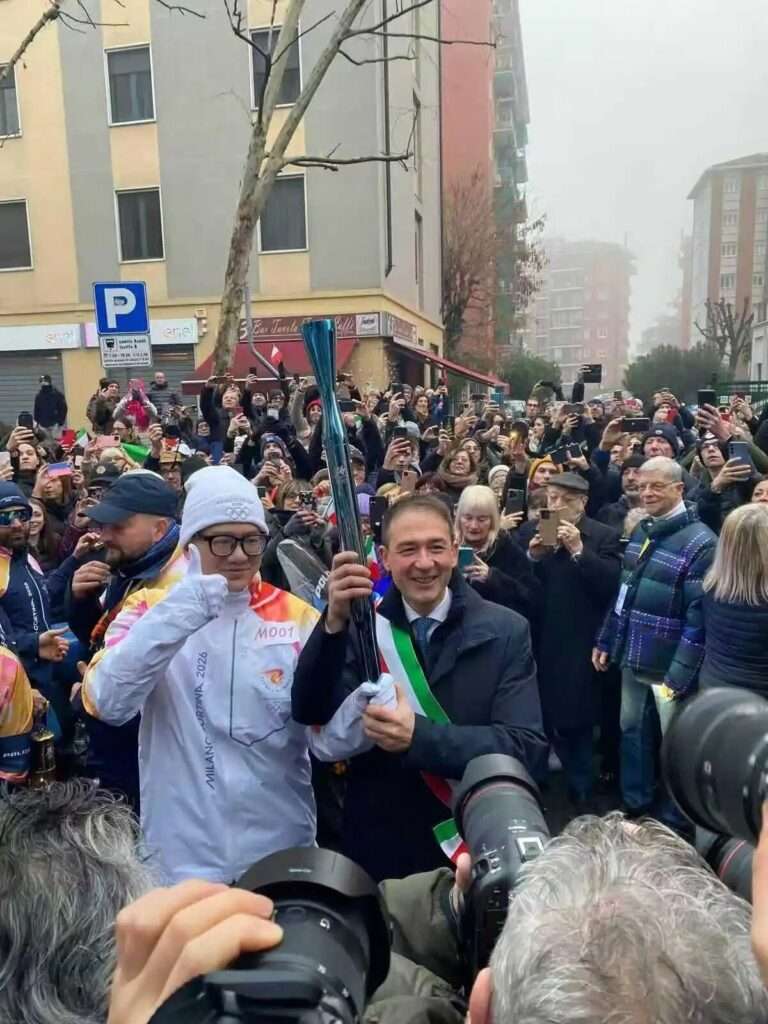
Perhaps it is exactly the Italian boy’s hug—and the many spontaneous requests for selfies along the way—that offers the clearest answer to what the Olympics can be. The most moving part of the Games is not only in stadiums, but also on the streets: where ordinary people can be seen, and where ordinary love for the Olympics can be warmly returned.
Photos by Zhang Wenquan