In northwest China lies a city where time takes shape.
With a history stretching back over 3,000 years, Xi’an was once the capital of thirteen dynasties .today, it stands as the technological and innovation hub of western China.
Xi’an is a city that lets you travel through time: you can feel the power of emperors in the gaze of the Terracotta Warriors, and the warmth of everyday life in the aroma of its bustling food streets.
The Underground Army: The Terracotta Warriors
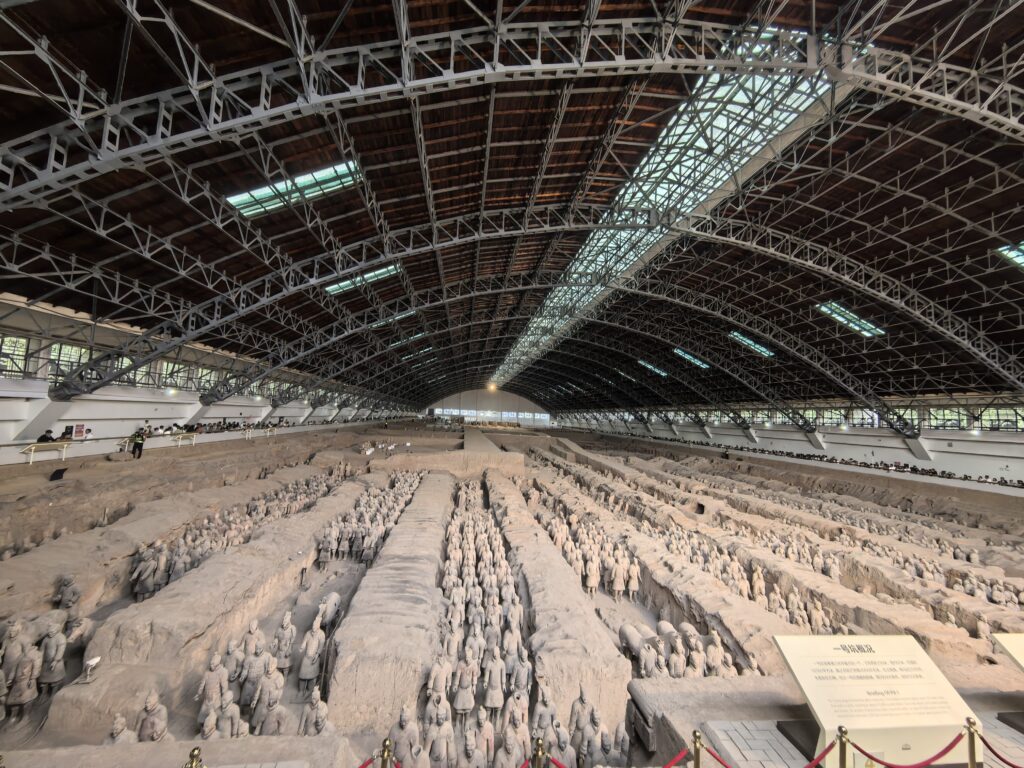
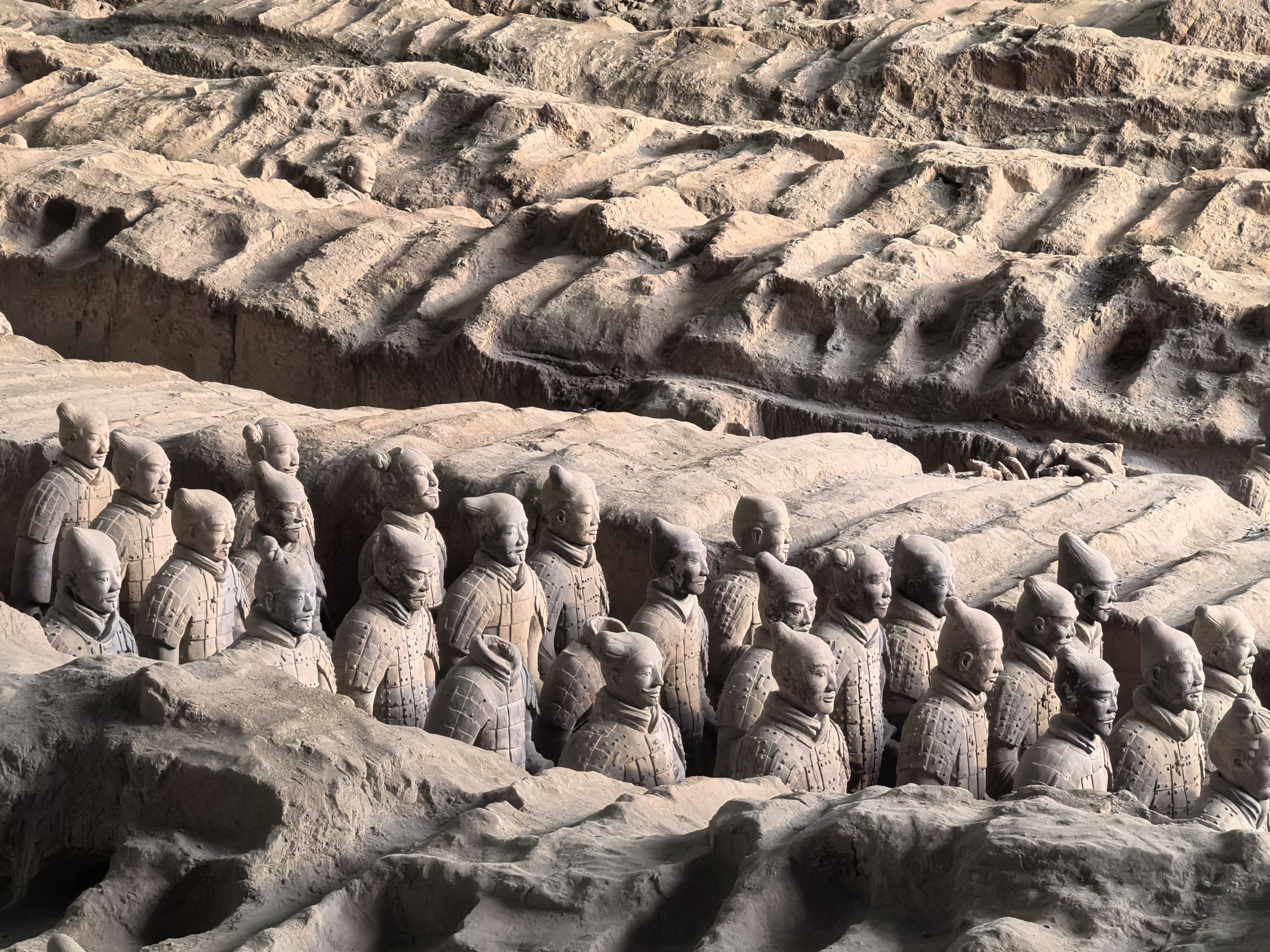
In the Lintong District of Xi’an rests an army that has slept underground for over two millennia — the Terracotta Army of Emperor Qin Shi Huang.
This is the world’s largest underground sculpture complex, often called”The Eighth Wonder of the World.”
Discovered by farmers digging a well in 1974, the army consists of thousands of life-sized soldiers standing in formation,each with unique facial features, hairstyles, and armor. Even the soles of their shoes bear distinct patterns.
The warriors were built to guard China’s first emperor, Qin Shi Huang, in the afterlife — a vision of eternal imperial might.
Standing on the viewing platform, visitors often describe the experience as attending a military parade that spans two thousand years. It is both archaeological marvel and living history.
The Starting Point of the Silk Road
From the Han dynasty onward, Xi’an — then known as Chang’an — was the starting point of the ancient Silk Road, connecting Asia, the Middle East, and Europe.
Caravans once departed from here, carrying silk, tea, and porcelain across deserts and mountains, and bringing back spices, music, and ideas.
That same spirit of openness endures today.
In the Muslim Quarter, Arabic spices mingle with the aroma of Chinese street food.
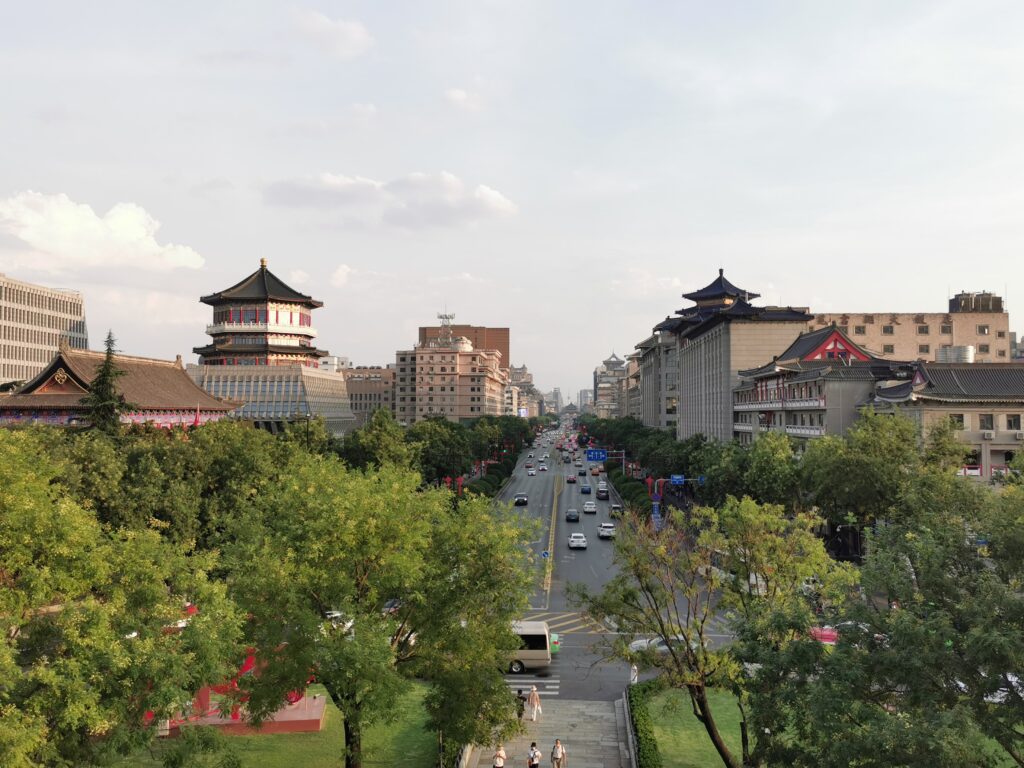
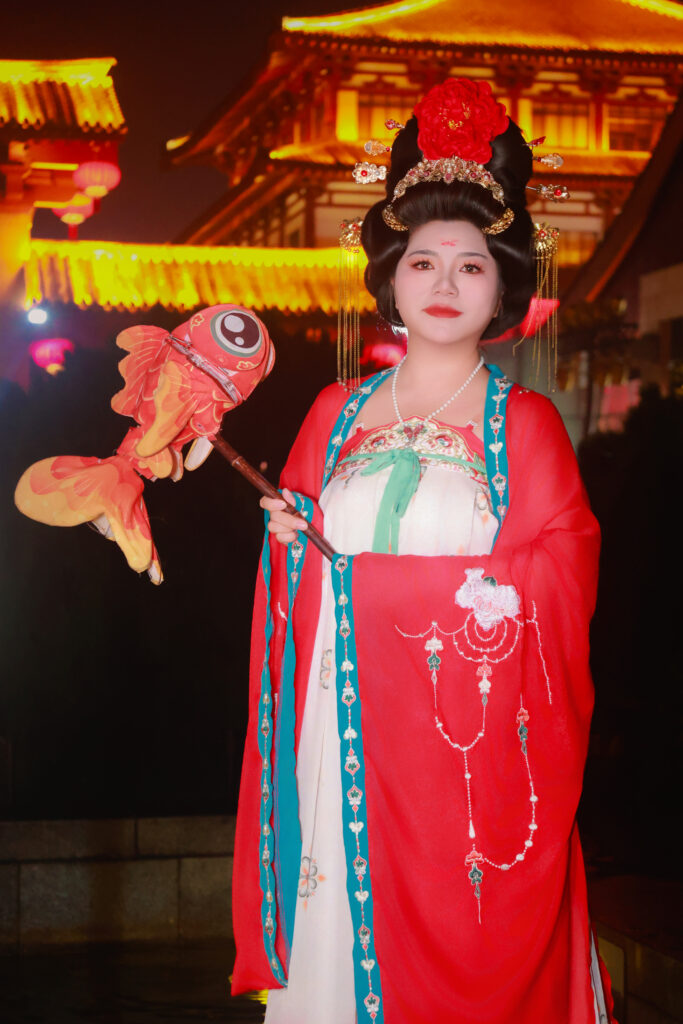
At the Great Tang Everbright City, Tang-style architecture glows under modern lights, blending tradition and innovation.
From atop the ancient city wall, the wind still seems to carry echoes of camel bells — while below, the skyline of modern Xi’an reflects the seamless coexistence of past and present.
Where History and Modernity Meet
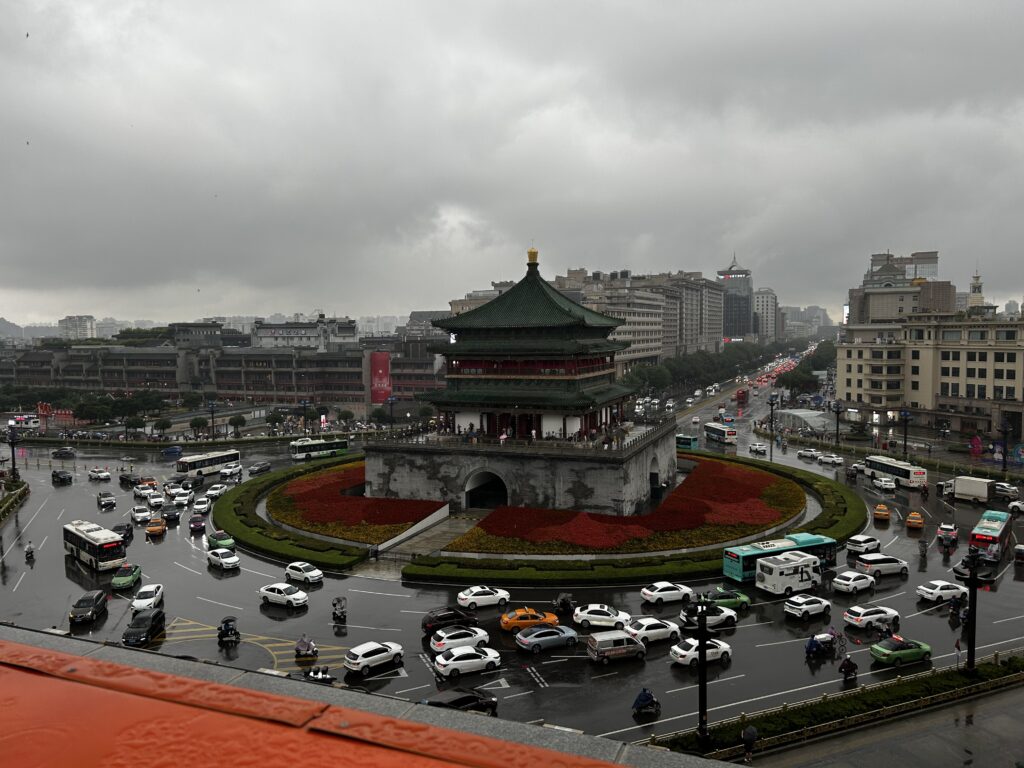
The Xi’an City Wall is the best-preserved and largest ancient city defense structure in China.
Cycling along its 14-kilometer length, visitors can witness two worlds at once:
on one side, centuries-old city gates and grey brick walls; on the other, skyscrapers and neon lights.
Young people in Xi’an now bridge those worlds with confidence — wearing Hanfu, China’s traditional clothing, while walking through metro stations or cafés.
At night, the Bell Tower and Drum Tower light up, and the streets fill with laughter, street musicians.
And the sound of sizzling local snacks — proof that the ancient capital still pulses with modern energy.
A Living Museum of Time
Xi’an is not frozen in the past — it’s propelling into the future.
As the technology hub of western China, it hosts major enterprises in aerospace, artificial intelligence, and renewable energy.
It is also a key hub of China’s Belt and Road Initiative, promoting trade and cooperation between Asia and Europe.
The ancient Silk Road once connected Xi’an to the world.
today, the China-Europe Railway Express departs from this same city, carrying”Made in China” innovations across continents.
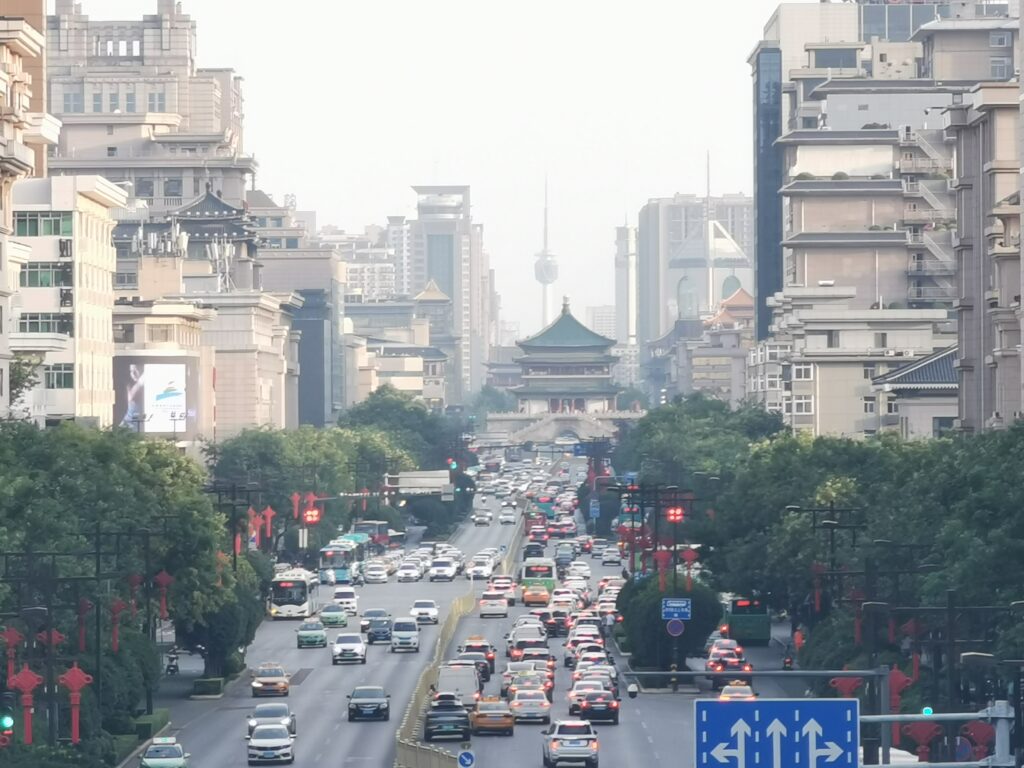
From silk to semiconductors, from caravans to high-speed trains,Xi’an remains a crossroads between civilizations.
It is, in every sense, a living museum of time,a city where China’s past and future meet.
Photos provided by Zhang Ying, Wang Yuhan, and Huang Jianyu